
ANNOUNCEMENTJourney Back to the ISS: TESSERAE Gen-5 Tiles Complete Testing at NASA ahead of Full Self-assembly Test
Rendezvous Robotics leads the next ISS demonstration of modular self-assembly in microgravity.
The mission features the most advanced TESSERAE tile system yet — 32 tiles, 192 cameras, 384 EPMs, and a new deployment system.
This marks the third TESSERAE tile mission to operate aboard the International Space Station.
December 15, 2025, Golden, CO.
The last time TESSERAE tiles flew aboard the International Space Station (ISS) in 2022, a handful of small tiles floated serenely in the microgravity environment. They nudged, corrected, and clicked into place. This successful demonstration was a pivotal moment, proof that modular autonomous assembly in orbit could work.
Now, with these fifth-generation (Gen-5) tiles, the team has expanded on those learnings and is taking the next step in its evolution with a third ISS demonstration of modular in-space self-assembly. The patented TESSERAE technology was invented at MIT by Dr. Ariel Ekblaw, incubated at the nonprofit Aurelia Institute, and launched commercially as Rendezvous Robotics, co-founded by Ekblaw alongside Phil Frank and Joe Landon. Rendezvous Robotics is managing this mission while simultaneously advancing and scaling the modular assembly technology to support commercial and government missions.
What is TESSERAE Gen-5?
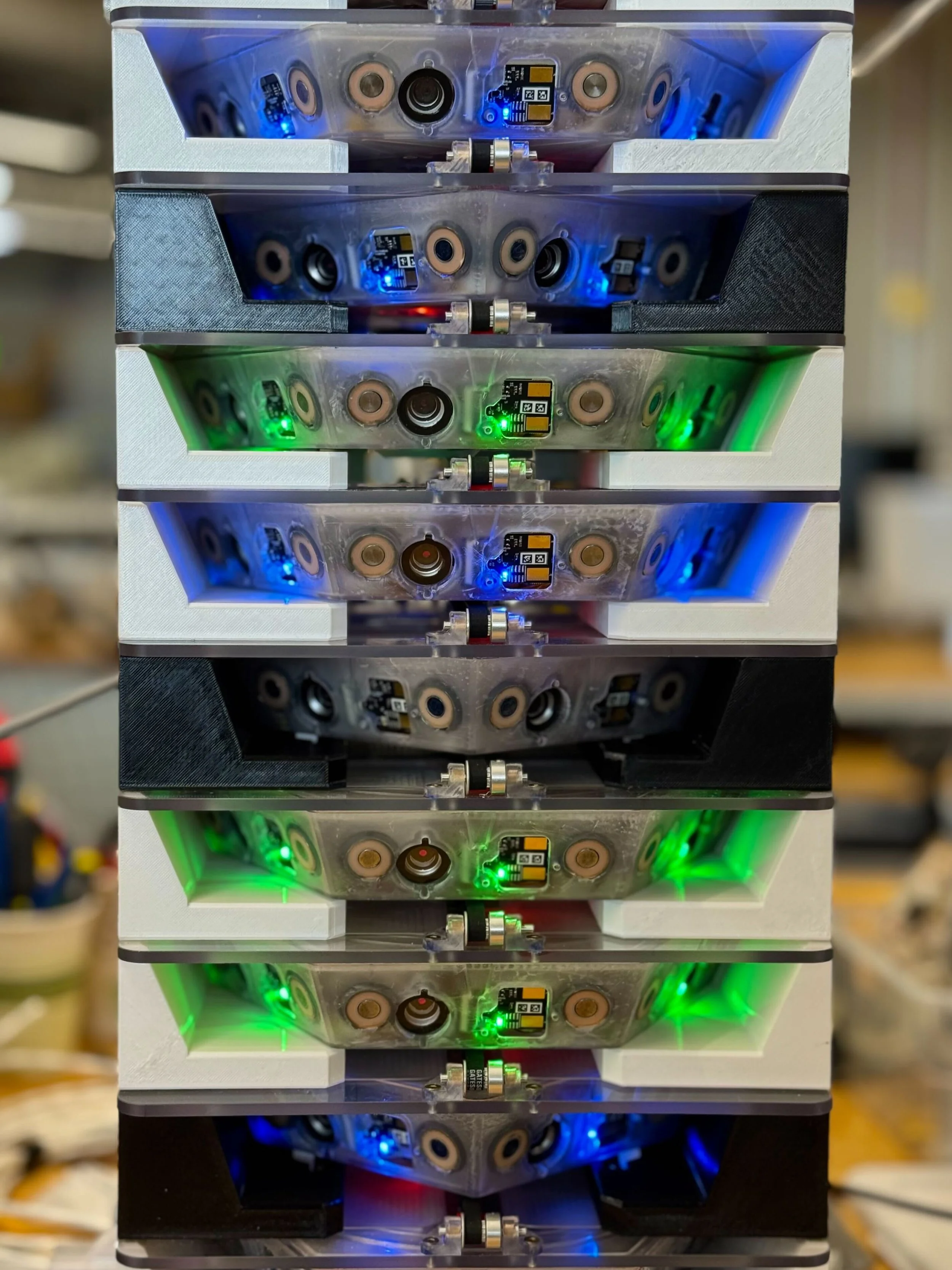
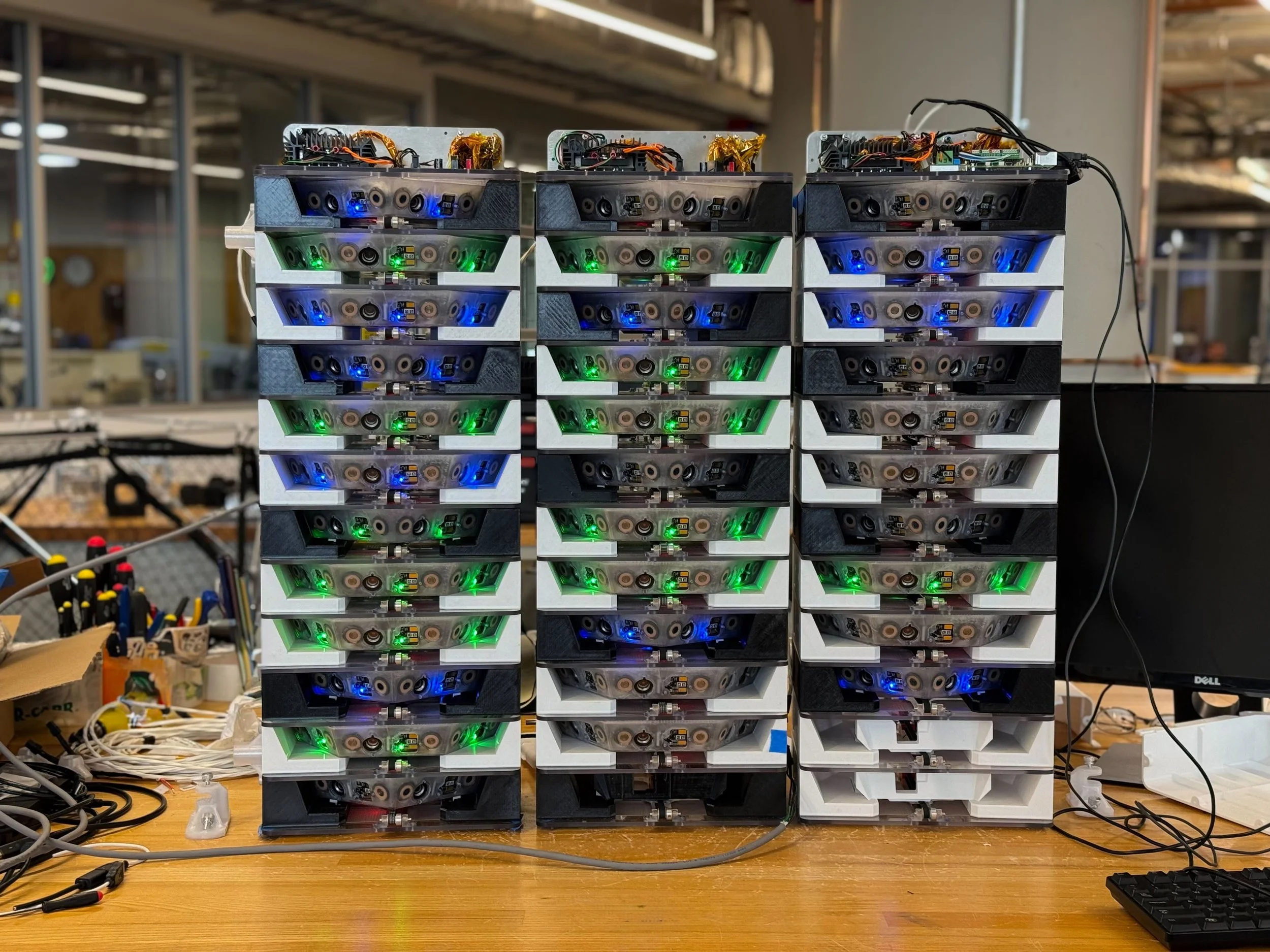
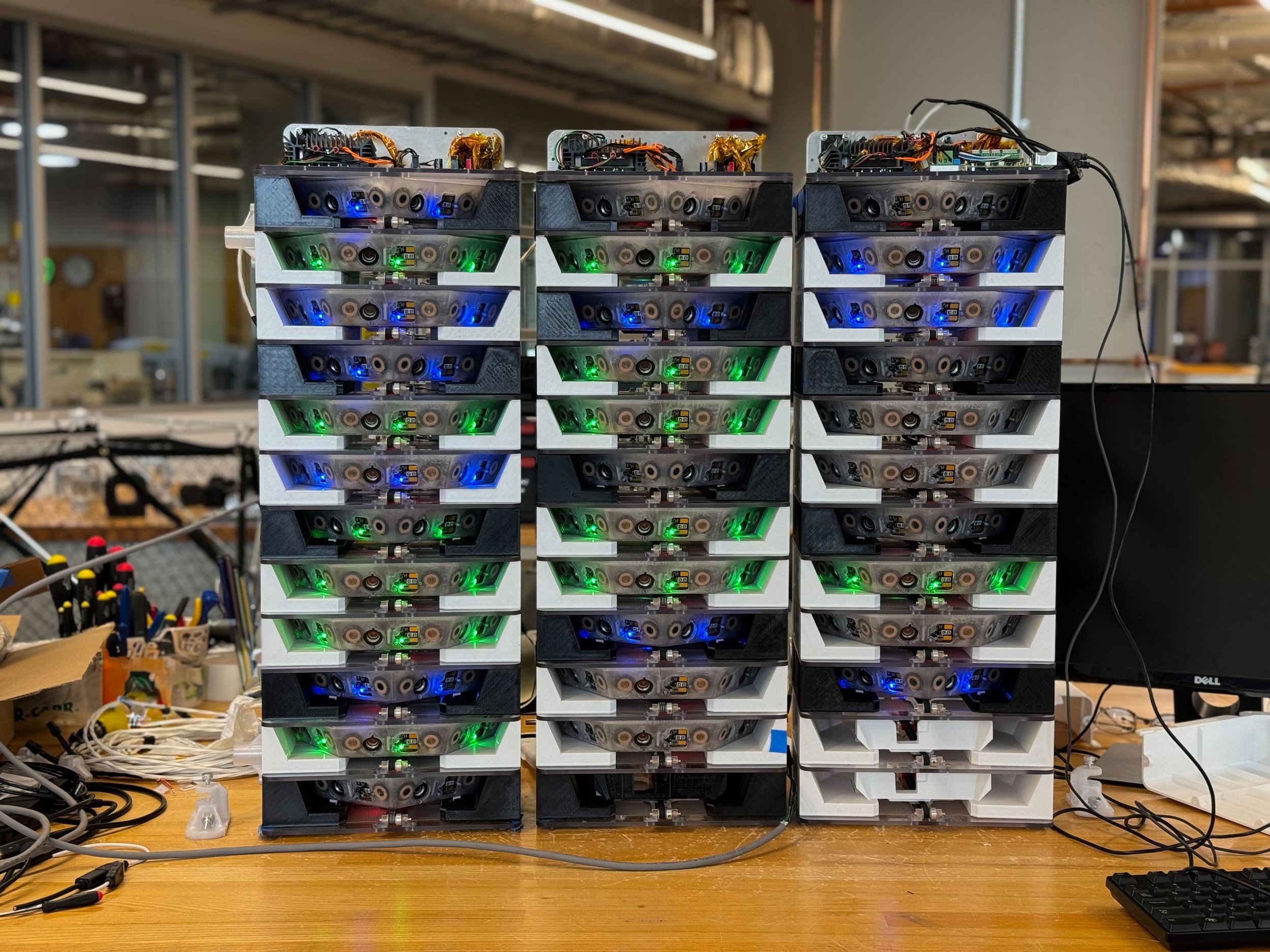
The latest TESSERAE system will be the largest and most capable demonstration of the system to date, with 32 advanced tiles, 192 cameras, 384 electropermanent magnets, a new dispenser, and a full three-dimensional sphere assembly sequence. It’s the first time the architecture will come together as a complete, complex structure in space.
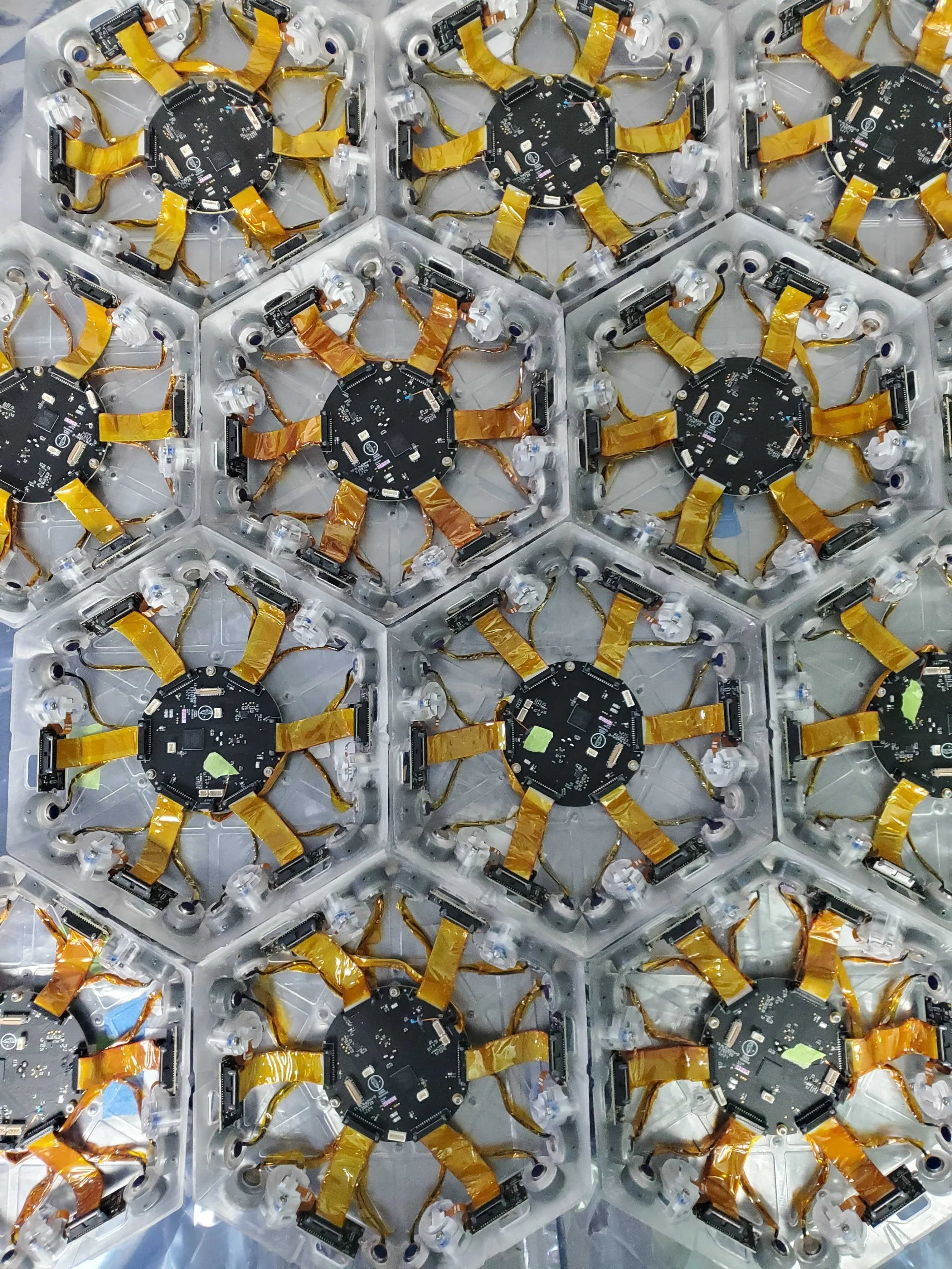
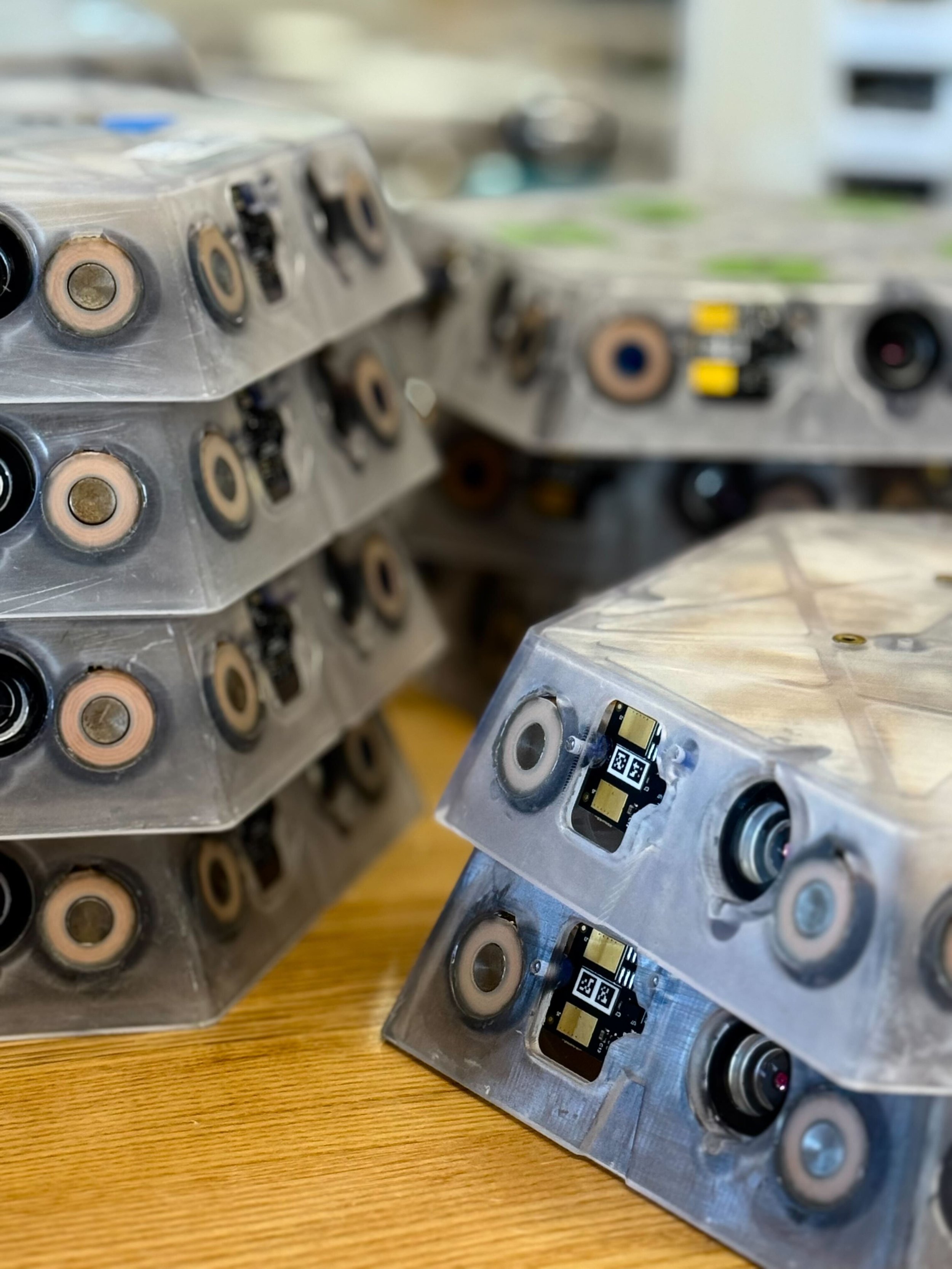
Gen-5 sees all with new visual sensing systems. Earlier generations of tiles used MEMS sensors and magnetometers to infer bond states. For the first time, the tiles use visual sensing: each tile carries cameras that determine the state of bonds between tiles. Across the system, that’s 192 camera lenses integrated into the tiles.
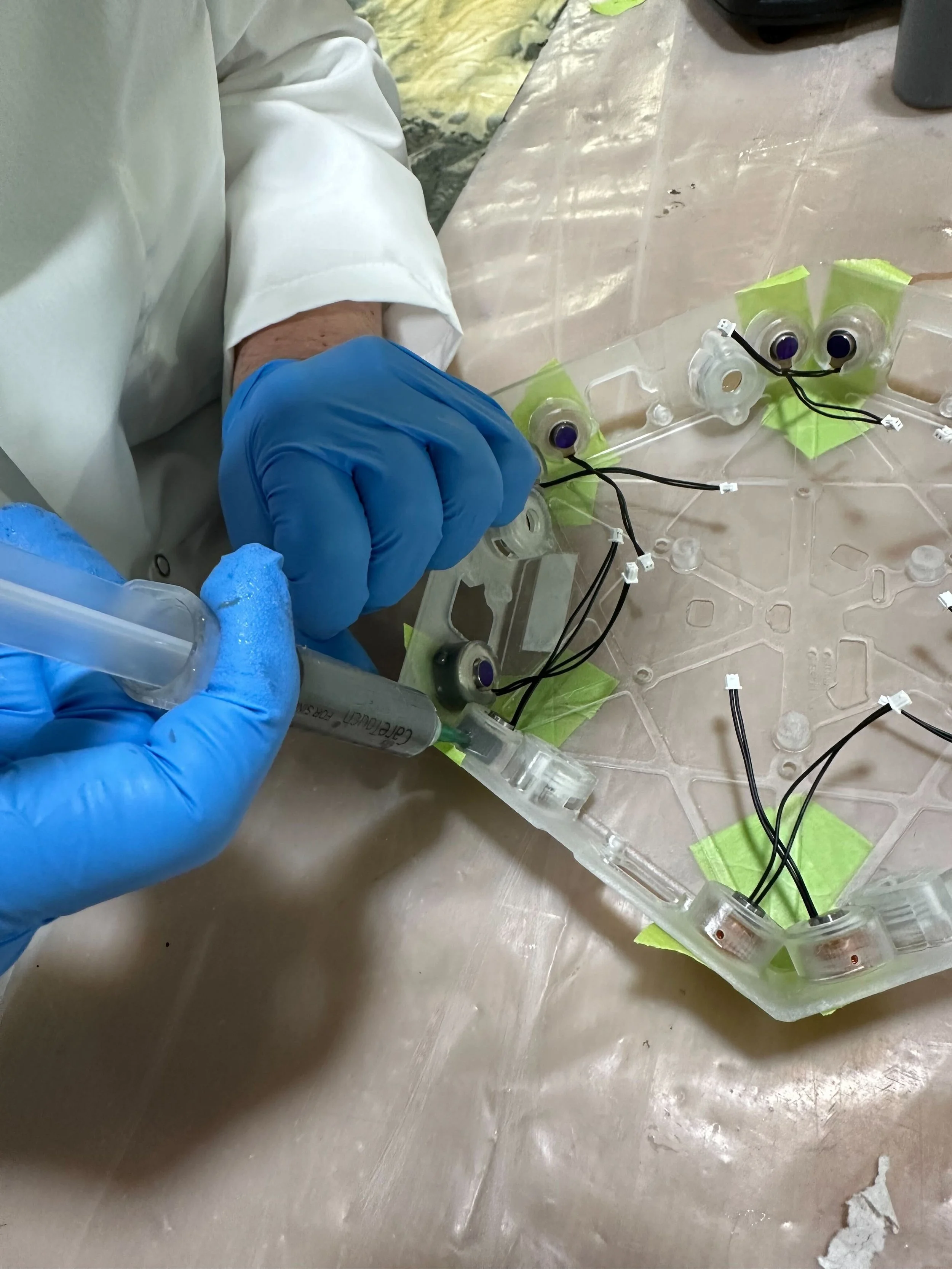
Now that’s what we call bonding. Each of the 32 tiles has electropermanent magnets installed on its sides, for a total of 384 EPMs, hand-bonded by the team. The ISS mission exercises these magnets in a wide range of configurations and bond states in real microgravity.
Packed and ready to swarm. This mission will be the first test of the flat-packed platform for stowing and releasing tiles performed in a dedicated experiment enclosure on the ISS to study how tiles deploy, arrange, and assemble within a controlled volume.
Flight-ready. Before heading to the ISS, Gen-5 had to undergo NASA’s full qualification campaign in Houston. After months of fabrication, assembly, and subsystem testing—including a microgravity check of the new visual sensing system during the Horizon 2025 parabolic flight—the tiles entered a series of flight-like evaluations designed to reveal any weakness.
The test sequence included:
EMI testing to ensure the system doesn’t interfere with ISS hardware
Power-quality testing to verify clean behavior on station power lines
Battery safety testing to confirm stable operation in all modes.
NASA engineers worked with the team throughout the summer to review data, troubleshoot edge cases, and validate performance. With the full campaign complete and the system cleared for flight, the team executed one final hardware-upgrade sprint before packing Gen-5 for handoff. The completion of this testing paves the way for its mission to the ISS.
Not our first rodeo. Aurelia Institute’s patented TESSERAE technology has been extensively tested at small and partial scales in microgravity. The tiles have previously flown on a Blue Origin New Shepard flight in 2019, a SpaceX CRS mission to the ISS in 2020, and again on the historic Ax-1 private mission to the ISS in 2022. Each previous mission provided critical data to the team to mature and evolve the technology to where it is today. All in preparation for commercialization by the Rendezvous Robotics team, which is currently developing a much larger, even more advanced modular tile system that will launch in late 2026 for the demonstration in the harsh environment of space, outside the protection of the ISS.
“TESSERAE started as a sketch of a Buckyball on my desk as a student at MIT,” said Dr. Ariel Ekblaw. “It’s been an extraordinary journey to bring it to life one tile at a time, and the ISS has been an integral part of this process of iteration and experimentation. I’m incredibly proud to be taking this next step with Rendezvous Robotics in pursuit of space infrastructure at scale.”
The Gen-5 Evolution
The fifth-generation tiles are significantly larger than previous iterations and boast several hardware and software updates, as well as a few radically different features from their predecessors. Earlier generations were designed with the smallest hardware possible to reduce overall launch mass and used MEMS proximity sensors and magnetometers to confirm proper tile assembly, enabling useful testing and information gathering. With this new system, the team focused on scaling the tile sizes and incorporating camera systems to determine the state of the bonds between the electropermanent magnets, no longer limiting the system to prototype scale and electronics. These changes provide full visual sensing and future computer vision analysis.
Each 21cm-hexagon and 19cm-pentagon tile was 3D-printed at Formlabs and then prepared and assembled at the Autodesk Technology Center in Boston, where Aurelia Institute is fortunate to have a research residency. All the flight hardware was built and assembled at Autodesk.
“Through the Autodesk Research Residency Program, we had access to state-of-the-art fabrication equipment, critical staff knowledge, and assembly space, which together allowed us to rapidly iterate hardware designs quickly and converge on solutions to issues that inevitably come up during any build process,” said Evan Hilgemann, Aurelia’s Senior Mechatronics Engineer. “Our collaboration with Autodesk really enabled us to complete the payload in a quick timeframe with a lean team.”
What’s Next
The future modular tile-based system is already underway at Rendezvous Robotics headquarters in Golden, Colorado. Launching in late 2026, it will be the first in-space, free-flight autonomous assembly mission—a step beyond enclosure-based tests and into the harsh environment of space, where orbital infrastructure will actually be built.
“This third ISS mission caps a series of tests focused on validating how our approach scales, demonstrating that small magnetic forces can reliably drive assembly in microgravity,” said Gerry Hudak, VP of Engineering at Rendezvous Robotics. “That gives us conviction to move fast on a fundamentally larger system designed from day one for real commercial and government missions.”
More updates soon!
Behind the Build
Check out the photos of our journey below: